Every dog owner wants the same thing: a healthy lawn and a happy pup.
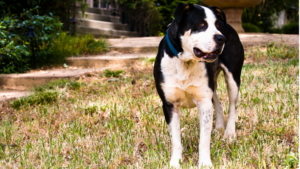
But if you’ve ever looked out at your yard and have seen brown spots, yellow spots, dead patches, or worn paths from dog running, you know keeping grass green with dogs can feel like a losing battle.
Dog urine, foot traffic, and playtime all affect your lawn differently. The good news? Grass and dogs can coexist. It just takes the right approach.
Let’s get to the bottom of what’s really going on — and what actually works!
Two main causes of lawn damage in dog yards:
1. Dog Urine Damage
Dog urine contains nitrogen. In small amounts, nitrogen is like lawn fertilizer. But when a concentrated amount of nitrogen hits the same spot repeatedly, it can create urine spots or pee spots.
That’s when you see:
- Brown spots
- Yellow spots
- Dead grass
- Dead patches
Female dogs create more concentrated dog spot patterns just because of how they squat in one place. Male dogs may spread it out more, but repeated use in one patch of grass can still cause lawn damage.
2. Wear From Foot Traffic
Dogs love routines. The same path to the gate. The same stretch of yard for running. The same doggy play area near the fence.
Over time, repeated foot traffic compacts soil and damages grass roots, especially in high-use zones. Even the healthiest lawn can struggle when roots are constantly stressed.
Traditional Ways to Keep Grass Green With Dogs
Many homeowners try multiple lawn care methods before finding something that works long-term.
Reseeding and Sod
One of the first solutions to damaged spots is to reseed or lay sod. Choosing the right type of grass matters. Some varieties tolerate wear better than others:
- Tall fescue
- Ryegrass
- Bermuda grass
- Kentucky bluegrass
Each type of grass performs differently depending on your region and time of year. Overseeding with grass seed can fill in dead patches, especially when combined with aeration.
But in high-traffic areas or a heavily used potty area, new grass may not have time to establish before it’s worn down again.
Lawn Treatments and Fertilizers
Some dog owners turn to lawn fertilizers, soil supplements, or specialized lawn treatments to counteract dog urine damage. There are even dog food supplements marketed to reduce urine spots. While adjusting diet can sometimes slightly reduce the amount of nitrogen, it rarely eliminates the problem entirely.
And be careful. Overusing lawn fertilizers or chemicals can create other lawn care problems, especially in areas where your furry friend hangs out.
Dilute and Quick Clean Up
Some recommend spraying down dog pee immediately with water to dilute nitrogen. You can also reduce additional stress on the grass by promptly picking up dog waste.
These small steps can support a healthy lawn but require constant attention and don’t address wear from dog running or repeated use in one spot.
Mulch and Landscaping Fixes
In some cases, homeowners turn heavily damaged areas into mulch beds or install alternative landscaping features to prevent mud and dead grass.
Mulch can hide visible damage in a potty area, but it shifts, scatters, and doesn’t reinforce the soil underneath. It also changes the natural feel of the lawn that many people want to preserve.
Grass Alone Often Isn’t Enough
The reality is this:
If a patch of grass is constantly exposed to foot traffic, it may never fully recover on its own.
You can reseed.
You can adjust your lawn care routine.
You can try different types of grass.
But if the underlying stress remains the same, damaged spots will reappear.
That’s where reinforcement, not replacement, makes sense!
A Smarter Way to Keep Grass Green With Dogs
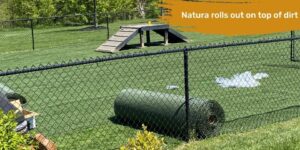
Natura hybrid turf was designed around one simple idea: Protect grass where it can grow and cover areas where it can’t.
Instead of replacing your entire green lawn with artificial surfaces, Natura acts as a protective ground cover in high-traffic zones.
It does two important jobs:
1. Protects Grass as It Grows
Where new grass is establishing, Natura shields the crown of the plant from wear. This gives grass a better chance to survive normal play and activity.
You can still mow as usual with your lawnmower once the grass grows through, though. Lawn care routines don’t have to change dramatically.
2. Covers High-Traffic and Potty Areas
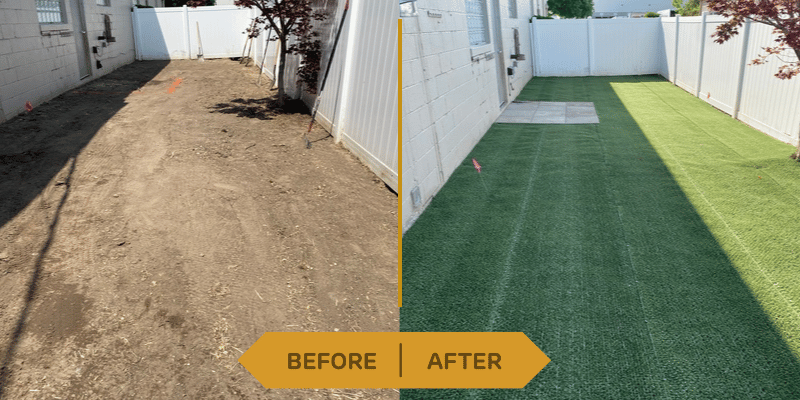
In areas where repeated dog pee or foot traffic prevents grass from surviving, Natura immediately covers exposed soil.
That means:
- Fewer dead patches
- Less lawn damage
- A yard that’s better than it was before
It works with your existing lawn, not against it.
Healthy Lawn, Happy Pooch!
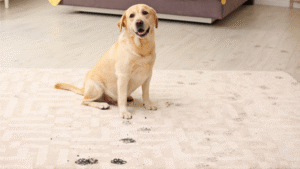
You don’t have to choose between a mud pit and a fully synthetic yard.
By reinforcing where grass takes the most stress, you can have a natural grass lawn and a yard that’s more durable and low-maintenance.
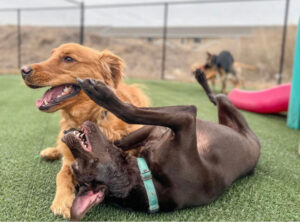
Your dog doesn’t have to give up playtime, and you don’t have to give up your green lawn.