A dog run can be one of the hardest-working parts of your backyard. Your dog follows the same paths, turns around in the same places, waits at the same gate, and heads to the same favorite spots day after day.
Eventually, all that paw traffic can catch up with the ground underneath.
If your backyard dog run has become muddy, patchy, uneven, or difficult to maintain, fixing it usually means addressing the underlying problem and choosing a surface that can better handle concentrated dog traffic. Depending on what’s causing the damage, you may need to improve drainage, repair the soil and grass, reinforce high-traffic areas, or rethink the ground cover altogether.
Here’s how to get your dog run back in shape.
Why Is My Dog Run Getting Destroyed?
Before you fix your dog run, figure out why it isn’t holding up.
Heavy paw traffic is an obvious culprit. Unlike the rest of your lawn, a dog run concentrates activity into a relatively small space. Dogs may travel the exact same route dozens of times a day, wearing down grass faster than it can recover.
But traffic isn’t always the only problem.
Poor drainage can leave the ground saturated after rain. Compacted soil can make it difficult for grass roots to establish. Deep shade may prevent turfgrass from getting enough sunlight. Digging, urine, and the occasional case of the zoomies can add even more stress.
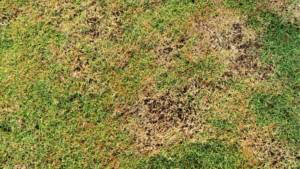
Once grass disappears, exposed soil is left behind. Add water to that dirt and congratulations: you’ve got a mud run.
Identifying the cause first will help you make a repair that lasts longer than simply throwing more grass seed at the problem.
What’s the Purpose of Your Backyard Dog Run?
A good dog run gives your dog a secure place to get outside while helping you manage how the rest of your property is used. Keeping activity in one designated area can protect gardens and other parts of the lawn, but it also means the dog run itself needs to withstand much heavier use.
Your repair should match that use.
A small potty area has different needs from a long run where a high-energy dog sprints back and forth all afternoon.
Start With Drainage and the Ground Beneath the Dog Run
If standing water is part of the problem, changing the surface without addressing drainage may only hide the issue temporarily.
Look at your dog run after a good rain. Does water collect in low spots? Does runoff from a roof or neighboring area empty into the run? Does the soil stay soggy long after the rest of your yard dries?
Minor low areas may be addressed by leveling and improving the grade. More significant drainage problems may require a landscaping professional to determine how water should be redirected.
Also check the soil itself. Constant foot and paw traffic can compact the ground, making it harder for water, air, and grass roots to move through the soil.
Fix those underlying conditions before rebuilding the surface.
Repair Bare Grass in the Dog Run
If the growing conditions are good and traffic hasn’t completely overwhelmed the area, you may be able to restore the lawn.
Remove debris and loosen compacted soil where appropriate. Level ruts and depressions, then choose a grass variety suited to your climate, sunlight, soil, and expected traffic.
Depending on the grass you grow, you can repair the area using seed, sod, plugs, or another establishment method.
Then comes the difficult part: giving it time to establish.
New grass is especially vulnerable to traffic. If your dog immediately returns to running the same route across freshly seeded soil, you may find yourself repairing the exact same bare spot again.
That’s one reason reinforcing a dog run can be useful.
Reinforce the Dog Run With Natura Hybrid Turf
If you’ve already reseeded your dog run more times than you’d care to count, the problem may not be your grass-growing skills. The area may simply receive more traffic than an unprotected lawn can comfortably handle.
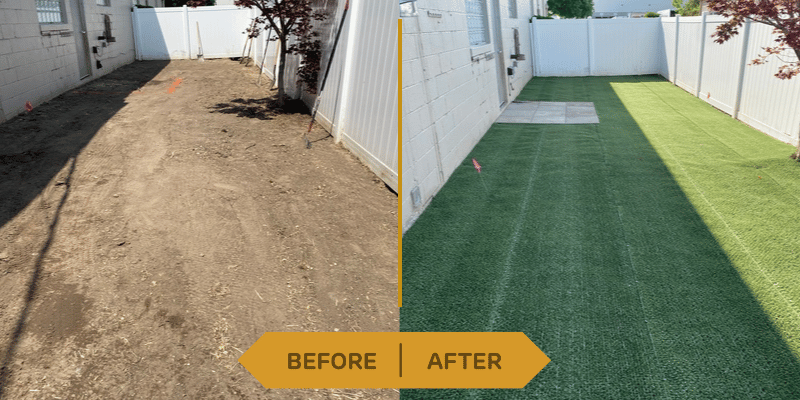
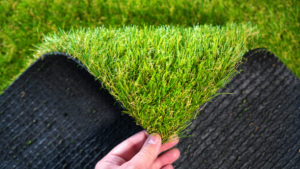
Natura hybrid turf is designed to reinforce natural ground while allowing grass and other vegetation to grow through.
Natura can be installed over prepared soil, grass seed, existing grass, or sod. Its three-dimensional, perforated structure helps protect the plant crown and ground beneath from repeated paw traffic while allowing water and air to continue moving through to the soil.
Grass can then grow through the openings where conditions support it.
Natura doesn’t make grass grow. If your dog run is too shady, poorly drained, or otherwise unsuitable for the grass you’ve chosen, hybrid turf won’t change those growing conditions. What it can do is help protect grass where it grows and provide coverage over the ground where maintaining vegetation is difficult.
That can help keep paws separated from exposed soil and reduce the amount of mud coming back inside.
Do You Need to Replace the Entire Dog Run?
Maybe not.
Take a look at where the damage actually occurs.
Dogs are creatures of habit, so wear tends to concentrate in predictable places. Gates, fence lines, turns, water bowls, and the route back to the house may take a beating while other parts of the run remain perfectly healthy.
Instead of rebuilding the entire area, you can reinforce the sections that need the most help.
Natura hybrid turf can be cut with household scissors, making it possible to fit the material around the layout of your existing dog run. Targeted installation can also make sense when most of your natural lawn is doing just fine and only a few spots repeatedly become bare or muddy.
Materials and Tools You’ll Need to Fix a Dog Run
Your exact shopping list will depend on what’s wrong with the run and how extensive the repair will be.
For a basic lawn repair, you may need a hard rake, shovel, topsoil, appropriate grass seed or sod, and watering equipment. Uneven areas may require additional soil and leveling tools.
If you’re reinforcing the area with Natura hybrid turf, you’ll need the appropriate amount of Natura for the space, the provided anchors, a mallet to install the anchors, household scissors for cutting and fitting, and topsoil for finishing edges as needed.
This is also a good time to inspect the rest of the dog run. You may need fencing materials, replacement gate hardware, or other supplies if the enclosure itself has seen better days.
Check the Fence and Gate While You’re at It
The ground isn’t the only part of a dog run that wears out.
Walk the entire perimeter and look for loose fencing, damaged boards, exposed wire, gaps, and sharp edges. Test the gate and make sure the latch closes securely.
Pay particular attention to the bottom of the enclosure if your dog likes to dig.
Natura may discourage some digging when loose soil is what attracts a dog to an area, but it isn’t a guaranteed digging-prevention system. A determined digger can potentially dig through it.
If escaping through digging is a concern, your enclosure should include a solution specifically designed around that behavior rather than relying on the ground cover alone.
Make the Repaired Dog Run Comfortable
While you’re fixing things, look at the dog run from your dog’s perspective.
Does it have adequate shade? Is fresh drinking water readily available? Are there areas where your dog can comfortably rest?
If the dog run is used for more than quick potty breaks, consider adding an appropriate shade structure or comfortable resting area without taking away too much room to move.
And if there’s a water bowl permanently stationed in the run, take a look at the ground around it. Spills combined with concentrated paw traffic can make water stations prime candidates for mud.
How to Maintain a Backyard Dog Run
Once you’ve fixed your dog run, a little routine maintenance can help you avoid another major repair.
Pick up solid waste regularly, clean water bowls, and check the area for holes or damage. Keep an eye on drainage after heavy rain and address new low spots before they become permanent puddles.
If grass grows through Natura, mow it normally. Before mowing, quickly inspect the hybrid turf to make sure everything is lying flat and the edges remain secured.
You can also overseed through Natura if the lawn begins to thin. Spread seed across the surface so it can reach the soil through the perforations, then provide the water and care appropriate for that grass variety.
Natura itself can experience wear over time, particularly in extremely high-traffic areas. If a small section becomes damaged, you can cut out the worn portion, fit a new piece into the space, and anchor it into place rather than replacing the entire installation.
Stop Fixing the Same Muddy Dog Run
If you repair a bare spot and your dog immediately starts running across it again, there’s a pretty good chance you know how this story ends.
A backyard dog run is supposed to give your dog a dedicated place to enjoy the outdoors. That means the ground needs to be designed for the amount of traffic it’s actually going to receive.
Start by correcting drainage and other underlying problems. Give grass the growing conditions it needs. Then consider reinforcing the areas your dog puts through the most abuse.
Natura hybrid turf helps protect natural grass and the ground beneath it while allowing vegetation to grow through. You can use it throughout a dog run or concentrate it in the muddy, worn-out areas that keep sending you back outside with another bag of grass seed.
Your dog can keep doing laps. Your yard just gets a little more help keeping up.